Menus, courses and accompaniments
Read menu formats, plan a balanced sequence and explain accompaniments to guests.
Lesson 4 of 12 · Hospitality Education
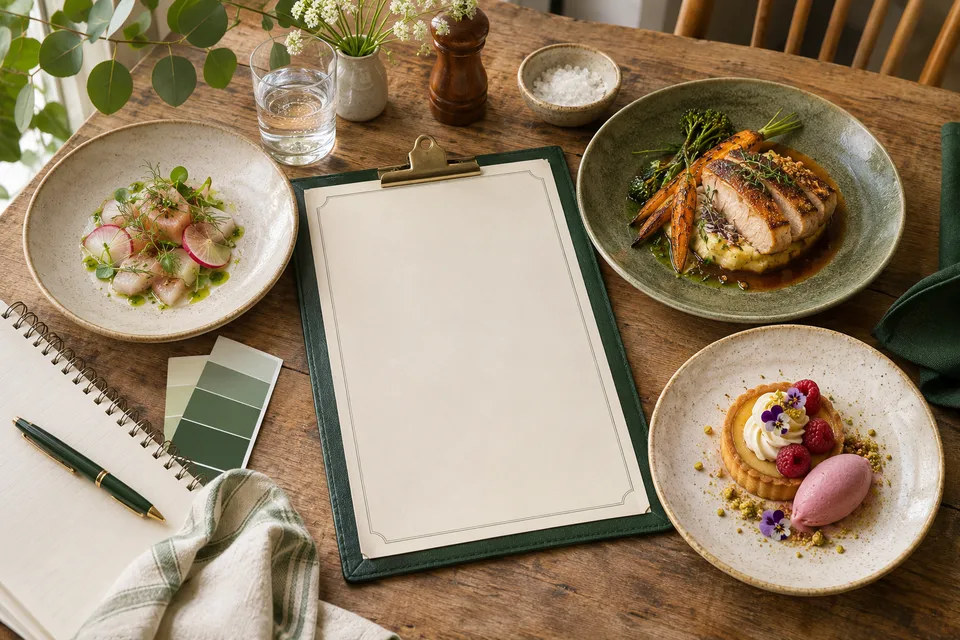
How it works
An à la carte menu prices items individually. A set or prix fixe menu offers a defined sequence for a single price, sometimes with choices. A menu plan must fit the kitchen, the guest and the timing. A modern meal may move from starter to main to dessert. More formal sequences can add soup, fish, cheese or other courses.
On shift
Read each dish as a service brief. Check its cooking method, principal ingredients, sauce, sides and relevant allergens. Distinguish an accompaniment from a garnish. A fish course might need a lemon and suitable cutlery, while cheese service calls for knowledge of the styles and what is served with them. Verify actual ingredients with the kitchen.
Practice with a menu
Practice check
A guest asks if a soup is vegetarian because the menu only names vegetables. What do you check?
Confirm the stock and any garnish or finishing ingredients with the kitchen before answering.